For a leader who wants an outside read
One conversation
Ninety minutes on the decision, and a note of where it landed.
One session
How it worksWhat is the Happiness Kit?
Six things people need from work to stay and do it well. Keeping all six present, on purpose, is Happiness Management.

Why does a company need a kit?
Modern corporate strategy is broken when it treats culture as a soft perk. Rigorous culture is a core driver of financial and operational stability.
Happy employees are more engaged, productive and effective. That is a documented fact, not an HR trend, and it was the starting point of my Executive MBA thesis, an ethnographic study inside IT companies. The companies that get it right do not have better perks. They have managers who listen, feedback that goes both ways, onboarding that feels personal, and leaders present enough to catch a silent struggle before it becomes a resignation. Happiness Management is that, done on purpose: intentional leadership inside real rules, processes and accountability. It is not pizza Fridays and a PlayStation. You cannot make everyone happy. You can stop holding people back, and the kit is the six places to look first.
What is in it?
Open each one
direction & meaning
Everyone can say, in one sentence, why this project, here, with these people. Not the mission on the wall: the reason for the work on the desk.
trusted to act
People decide in their own lane without checking upward first, and they know exactly where the lane ends.
seen & valued
Good work gets named out loud by someone other than that person’s manager.
room to rise
Someone on the team is visibly better at something than they were six months ago, and it happened on purpose.
part of something
The quietest person on the team spoke in the last group conversation.
sustainable energy
The pace is one people can keep. Targets are met and the sick days are not rising to pay for it.
What does each one look like?
How do you find the thin one?
Reactive management ignores the break; strategic leadership repairs it. I map where your thread is fraying:
You cannot fix what you do not understand. Before we discuss packages or structural realignment, I trace your organisational health: qualitative ethnographic research inside your workspace, a map of how your internal communication actually moves, and unfiltered team sentiment captured through structured check-ins. That exposes the exact point of friction. Fix the break first, then scale.
crisis management
Your talent acquisition costs spike because your culture no longer aligns with your senior team’s need for meaning. You are losing developers because the thread of “The Why” has been severed.
People rarely leave for money first. They leave when they can no longer answer why this, here, with you.
Executive blind spots isolate your management layer. Product owners and team leads mask growing exhaustion behind silent compliance to maintain a startup facade, fraying the bond of trust.
Silence from your best managers is not stability. It is the last quiet part before it starts costing you.
Ambiguity in your processes causes hidden friction. When project scopes creep and command structures conflict, your engineering velocity stalls because the thread of information flow is knotted.
Velocity does not fall because people slowed down. It falls because the instructions disagree with each other.
Where do you sit?
Great leadership is not all spreadsheets and it is not all feelings. It is knowing which one the moment needs. Move the dial and see what happens at the extremes.
50% business · 50% people
This is where I do my best work.
Strategy with a pulse. Empathy that ships. An MBA that talks to people.
Which one looks like your team?
Three teams, the same six months, the same measure: how much was being said. Nobody has to be told what the line means. Pick the one you recognise.
Month 1Month 2Month 3Month 4Month 5Month 6
Busy weeks, quiet weeks, and never a flat stretch. This is what healthy looks like: not constant noise, just a line that never disappears. Nobody has to be reminded to talk.
If this is you, the work is keeping it there while the team grows.
People talk, but only about the task in front of them. Nothing is broken and nothing is being said either. This is the one that surprises leaders, because every individual metric looks acceptable right up until someone resigns.
Usually a structural thread: the process leaves no room to say anything else.
The line was fine, then it went flat, then it came back thinner than before. A gap like that is almost never a holiday. It is a moment where saying something started to cost more than staying quiet.
Usually a leadership thread, and the gap is the cheapest place to start looking.
Where do I start?
Fifteen minutes, no email, and you’ll know which of the six are thin.
Start the checkNot sure which door?
Two choices, no score, nothing stored. The leadership check is for reflection; this is for finding the right shape of work.
For a leader who wants an outside read
Ninety minutes on the decision, and a note of where it landed.
One session
How it worksFor a company where something is off
Interviews across every level, a diagnosis of which of the six is thin, and a playbook.
Scoped after the first conversation
How the audit worksFor a founder or executive who wants a sounding board
One structured session a month and a line open in between.
Monthly, three months minimum
How the advisory worksFor anyone with a room, a programme and guests
Send the plan, get the blind spots back before your guests find them.
One conversation
How the audit worksFor a team lead with one stuck situation
Ninety minutes on that one thing, and three concrete moves for the week.
One session
How it worksFor a new manager, or the manager of a new team
Six conversations over three months, with someone who has been in it.
Six conversations over three months
How it worksFor a leader who is not sure what they want next
Three conversations to map what you want and what is in the way.
Three conversations
How it worksFor a team that needs to learn one thing well
Half a day or a full day on an event, a meeting, a presentation or a new team.
Half a day, or a full one
The sessionsFor someone leading themselves, often from somewhere else
Solo founders and nomads have their own door: one conversation about direction, focus and the road.
One conversation, on nomad.beingvaclav.com
Go to the nomad siteHow can we work together?
By leaders I mean the founder running a company as much as the team lead running five people. Your team is like no other, and neither are you, so nothing here is a ready-made programme: it starts with what works everywhere and gets built around your situation. Two doors, one for each side of the table, and a third that lives on the other site.
I lead a company
A culture audit and a people-oriented mindset that pays off long term.
Not for you if the audit is meant to confirm a decision you have already made.
I lead a team
Growing into the leader people like working with, delivering results together.
Not for you if you would rather be asked questions than told what I would do. That is coaching, and there are good coaches for it.
Three shapes: one conversation, a package, or something ongoing. What each costs depends on the size of your team and how deep you want to go, so I quote it per engagement rather than from a list. Tell me which one sounds right and I will come back with a number and a scope.
Something for the whole team?
Half a day or a full day, in your office or on a call, in Czech or English. The framework in practice: an event is belonging and recognition made visible, and a meeting is purpose and autonomy in twenty-five minutes.
Half a day or a full day · plus travel outside Prague
Where does it come from?
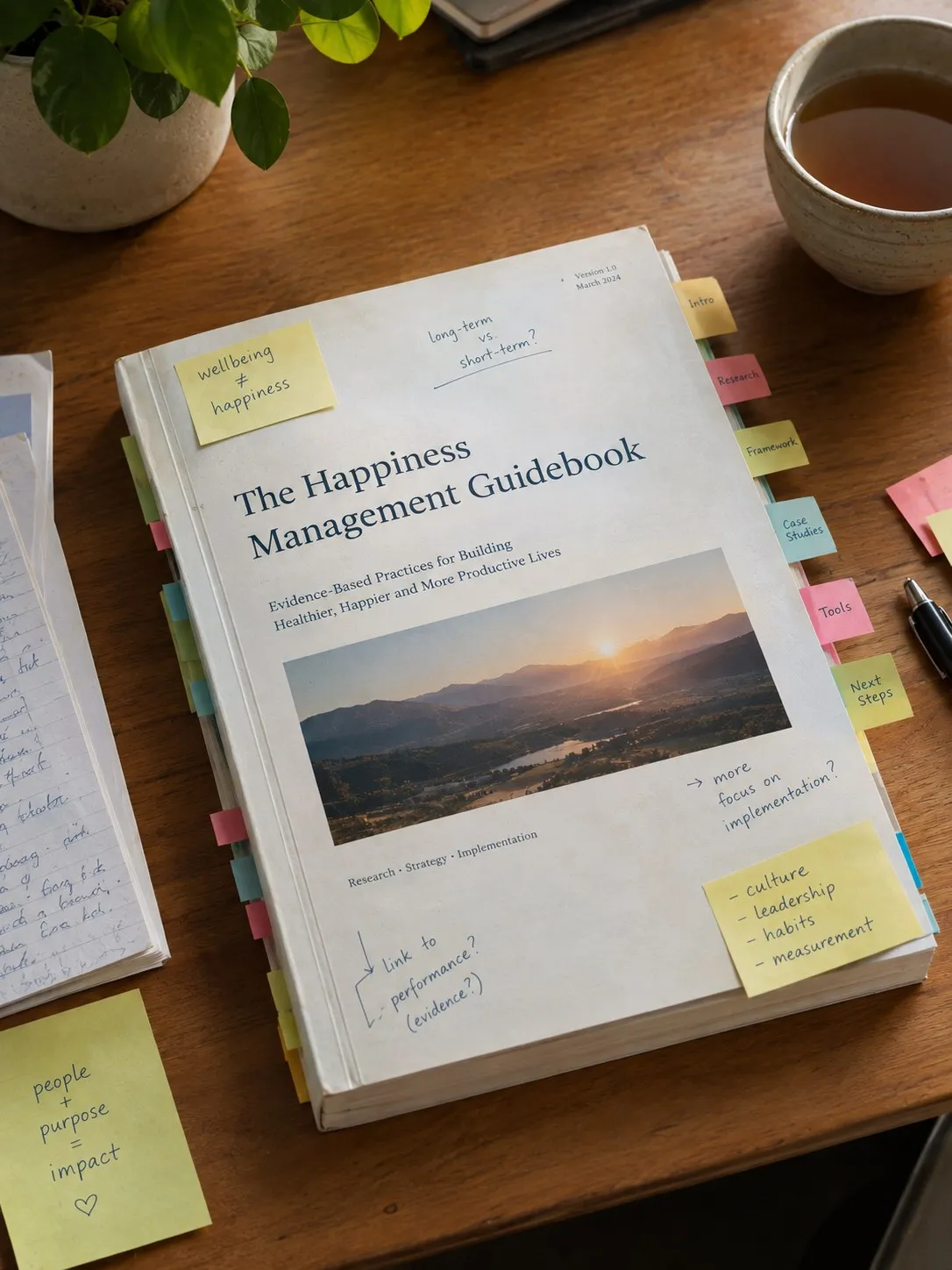
Happiness Management, as I define it, is not office perks or token wellness benefits. It is a rigorous, evidence-based strategy: improve the day-to-day human experience and you address the root causes of why people leave.
When people feel seen, heard and aligned, the correlation is direct: fluctuation drops, productivity climbs and the organisation gets more resilient. Operational strategy and human empathy are not opposing forces. They are two halves of one leader.
The playbook comes from ethnographic research inside IT companies, validated at graduate level in my Executive MBA thesis. It turns academic observation into leadership habits that build workplaces which scale without burning people out.
The thesis behind itWhat happens on the call?
You talk, I listen, mostly. I’ll ask what is actually happening, not what the org chart says, and by the end we both know whether I am the right person for it. If I am not, I will say so. No slides, no proposal, no follow-up sequence. If it makes sense, the next step is one of the formats above, and you pick it.